A website dedicated to vintage computing
New DEC TU56 Tape Images for simH |
Compupro Disks Archivedby billdeg Total messages in this thread: 1 Compupro Disk Archive from Ben Stewens. From the looks of these, many of these disks will return a directory listing on early 80's CP/M systems with a Z80. Some of these may reqire a specific terminal, keyboard map or screen width. Depending on the system these programs may try to hit memory locations that cause the OS to bomb. If you're looking for OS and other program disks for the Compupro, Click here.">... [ read more ] |
Digital TU56 for PDP-9?by billdeg Total messages in this thread: 3 Updated: [ W850 C sent to RICM ] 07/31/2026 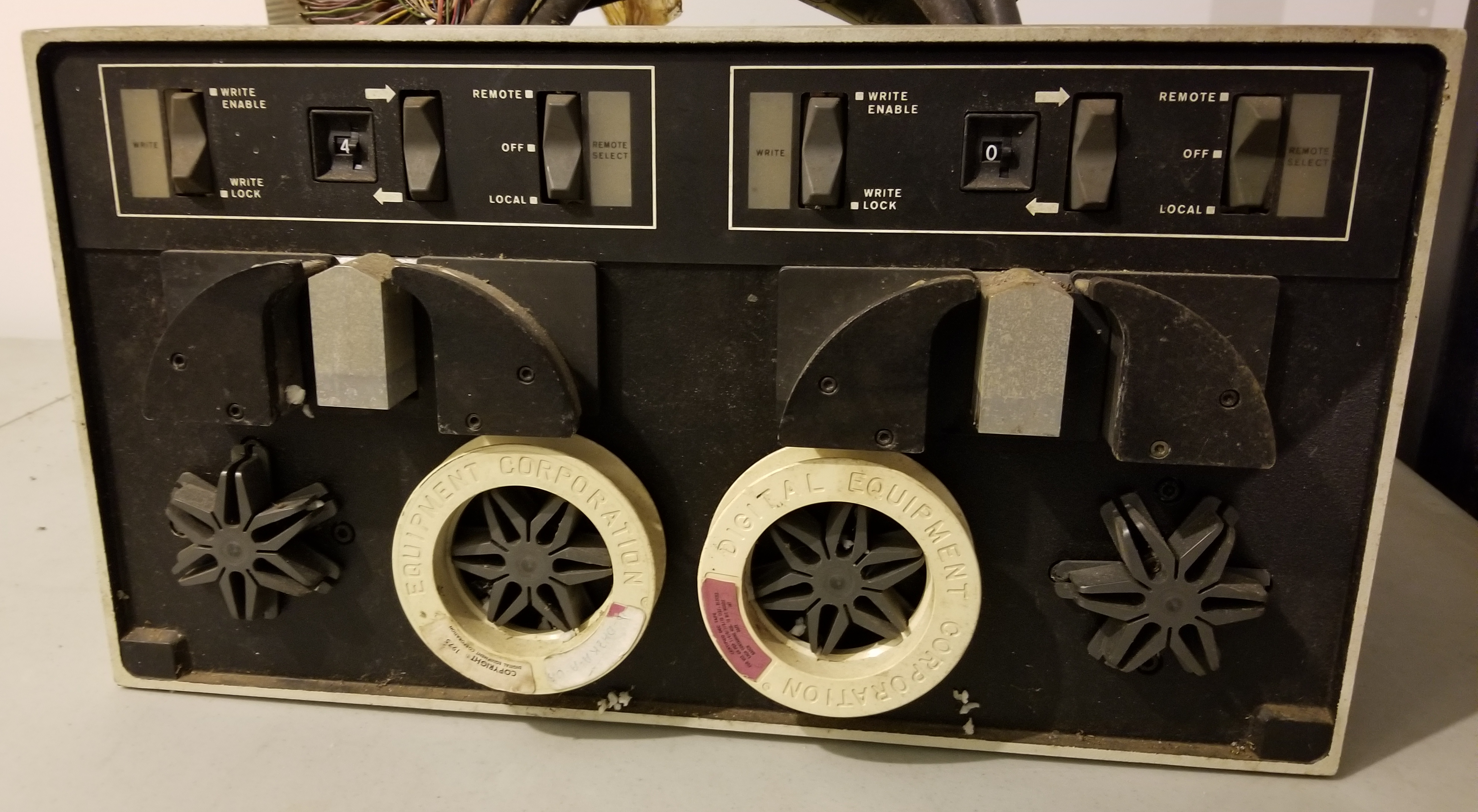 View of a recently donated TU 56 dual tape drive, prior to any restoration efforts. Click image for larger view.
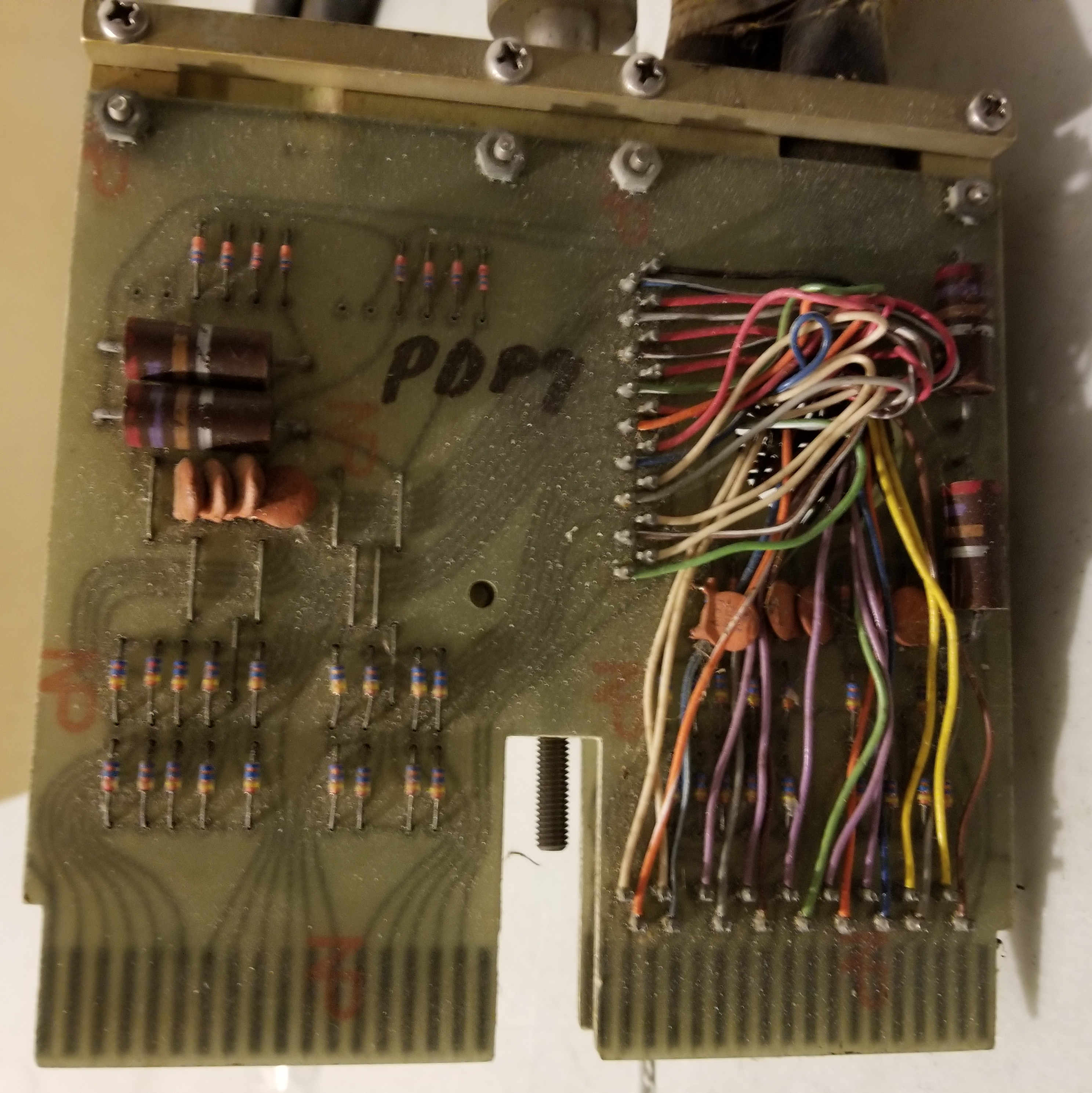 W850 C bus connecting cable. This end goes to the PDP-9 (!). Click image for larger view.
More photos">... [ read more ]
|
C Program for Reading 9-track Tapesby billdeg Total messages in this thread: 2 Updated: [ C Program for Reading 9-track Tapes ] 07/03/2026 Tom Hunter sent me a C program for reading 9-track tapes attached via SCSI to a linux PC. I updated it to try 5 times if the tape does not read and then physically move the tape forward a hair to try a new section of tape, assuming the tape is bad. It assumes the location of the 9-track drive in linux is called /dev/nst0. I used this program to read 800, 1600 PE and 6250 bpi tapes in an M4 9914 9-track drive. /* * recovertap_v2.c * * Tape recovery tool for problematic 9-track SCSI tape drives. * * Behavior: * - Reads from /dev/nst0 * - Writes recovered data to output file * - On read error (EIO): * issues SCSI SPACE command via sg_raw * retries read * - Never exits on single read error * - Logs all actions * * Compile: * gcc -Wall -O2 recovertap_v2.c -o recovertap_v2 * * Run: * sudo ./recovertap_v2 output.bin */ ">... [ read more ] |
Computer History and Restoration Linksby billdeg Total messages in this thread: 1 The thread date indicated last update. Suggest a site here. Bitsavers Software and Document Archive https://bitsave...avers.trailing-edge.com (mirror) Typewritten Software Vintage OS Manuals http://www.type...Manual/ Retroarchive Multi-Platform http://www.retroarchive.org (not secure) TextFiles.com rTTY Art Repository http://artsc...es.com/rtty/COLLECTION/ (not secure) Dave Dunfield's Site - vintage computer newbies should start here, disk archiving info here https://www.classi...dunfield Motherboard and Floppy Controller Test Results Relating to Disk Archiving https://rails...tfdc.htm Glitchworks Products and Projects https://users....vintage.html Bryan's Old Computers Document Archive https">... [ read more ] |
LNW80 Microcomputer Restorationby billdeg Total messages in this thread: 2 Updated: [ Wiring Pinout RGB Cable ] 05/06/2026  The LNW80 computer is a Radio Shack TRS 80 Model 1 clone, more or less. The BASIC is different and the memory map is different. Any programs that rely on either of these things will not operate properly, but DOS PLUS and NEW DOS for the Model I is easily adapted for the LNW80. The photo above displays the opening panel of the Modular Software Associates LNW BASIC Demo. LNW BASIC has commands that employ the LNW80's color display capabilities. Click image for larger view.
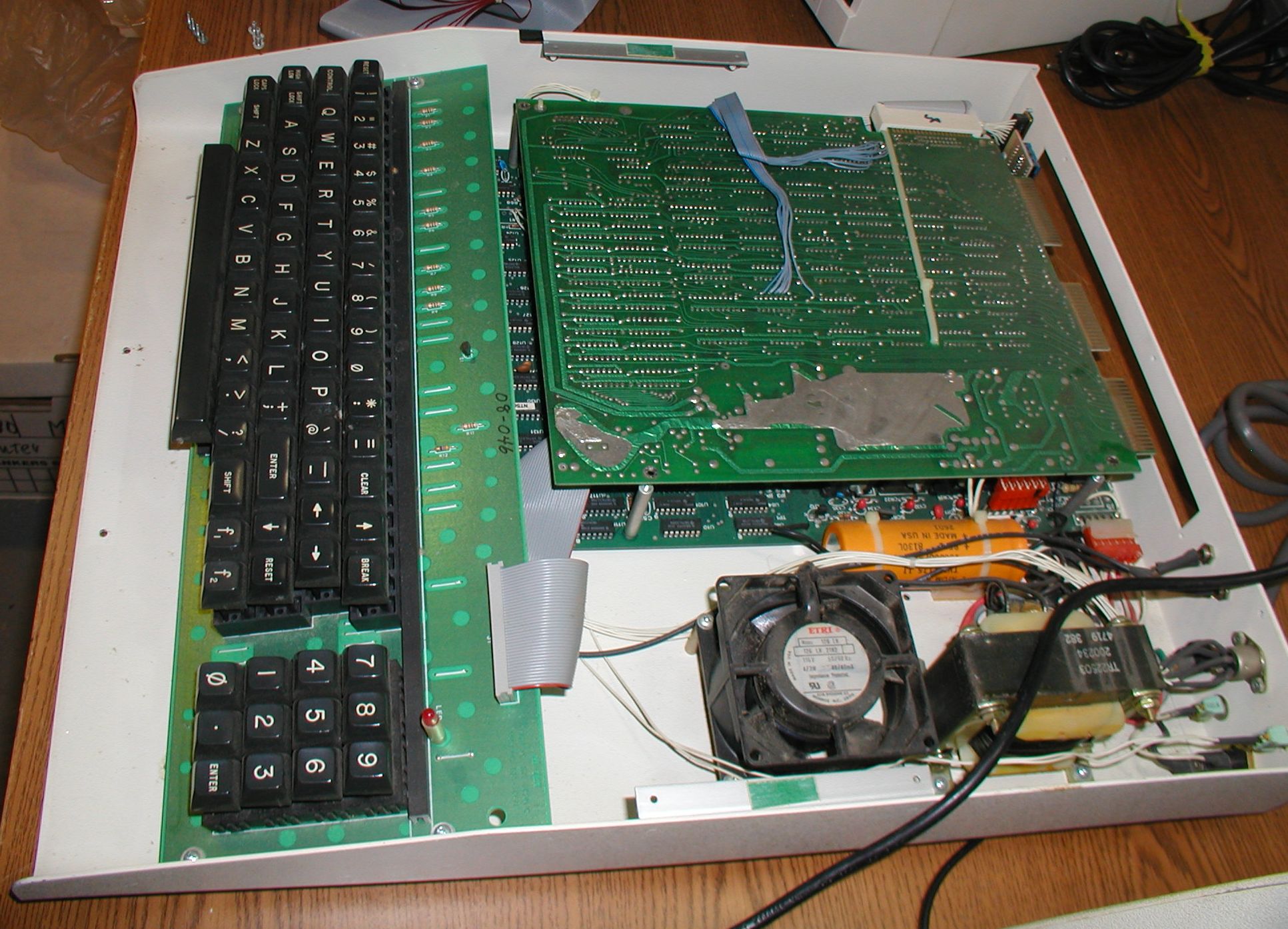 With the chassis cover removed, this image reveals a twin control board configuration. On top is the System Ex">... [ read more ]
|
1981 Ohio Scientific Challenger 8P-MFby billdeg Total messages in this thread: 1  This 1981 Ohio Scientific Challenger 8P (missing name plate) is, I believe, the 8P-MF model. It would have been sold with an additional 8" disk drive unit. Click image for larger view.
 Here's a view of the controllers that make up the system. Click image for larger view.
 This computer does power up and display the garbled video RAM initialization one would expect, but I was unable to progress further without the">... [ read more ]
|
Items Wantedby billdeg Total messages in this thread: 1 This list is maintained regularly. Thread date is last update. Contact me Here. IBM 9000S. A scientific PC produced with at the same time as the IBM XT with built-in printer (?) M7261 KD11-B CPU board 1 CONTROL LOGIC & MICROPROGRAMMED MODULE (PDP 11/05 or 11/10) Findex portable computer (any model) PCS Micropac 80, Superpac 180 and related DVW Microelectronics Husky Commodore B Series hi-profile keyboard(s) AT&T UNIX PC keyboard(s) Computer Data Systems "Versatile 2" s-100 computer 1977 (Newark, Delaware USA computer) Casio FX-9000P Canon CX-1 or BX-3 Acorn BBC Model A Eagle Computer Eagle II E (I have disks, need computer) Sord SM80X Oki 1F COM7 laptop Morrow Decision 1 Microvoice Nugen Sycor Model 302 Key-Cassette Terminal California Technology International 1108-A Manual/documentation Any mid 70'">... [ read more ] |
UNIVAC 9x00 Peripheral Card 1971by billdeg Total messages in this thread: 1 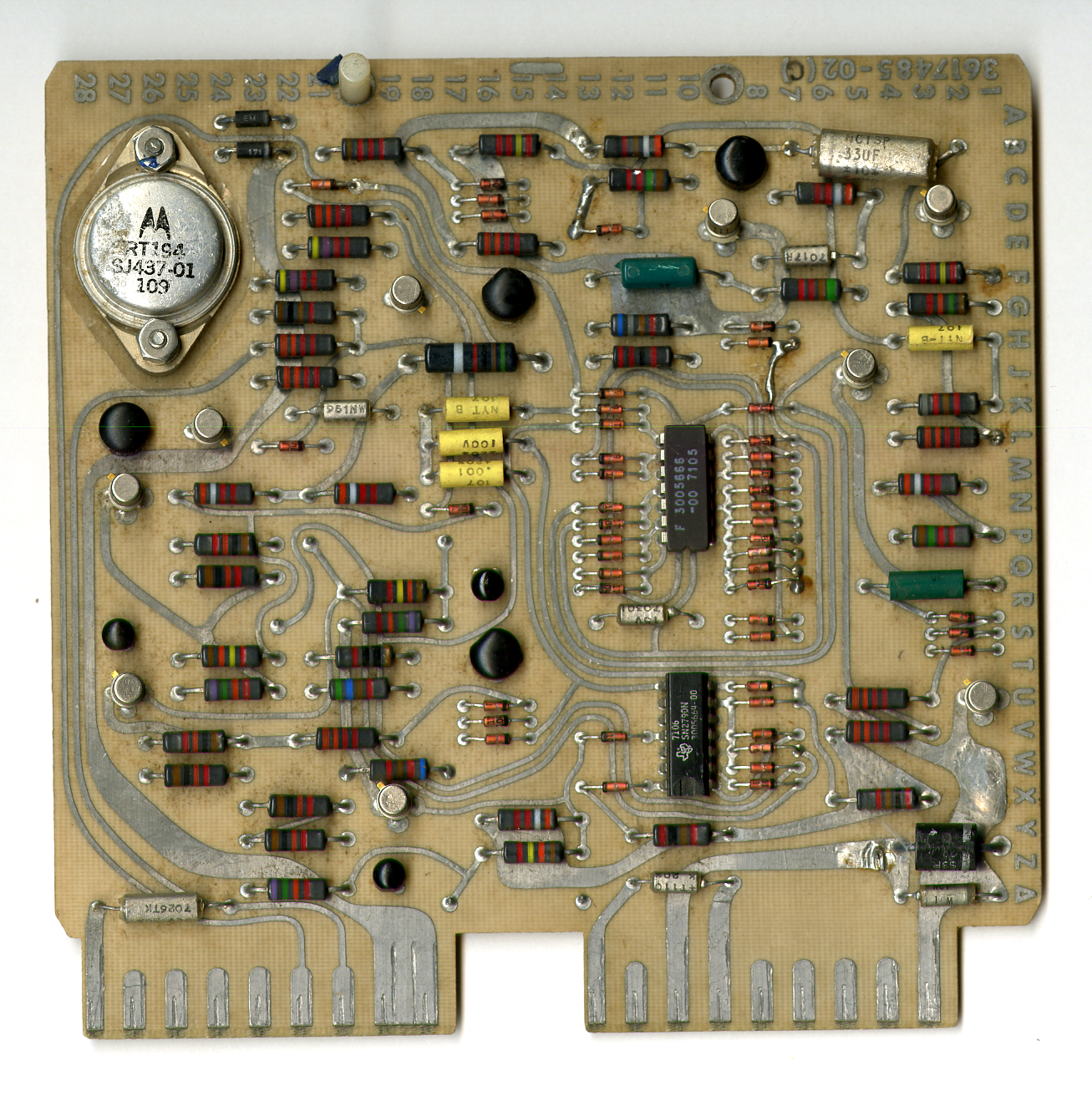 The front view of a 1971 UNIVAC 9300 or 9400 controller card. The words "UNIVAC" are not printed on the card, and it has been difficult to specify where this card came from. The date stamp on the 74 series ICs found on the front of the board are 1971. Click image for larger view.
 Here is the rear view of the same card. Twin 18-pin bus connectors. Click image for larger view.
The UNIVAC 9000 series was produced to serve as an IBM 360-compatible. The first 9000's were sold in the mid 1960's. By 1971 the 9000 systems being sold by UNIVAC (9300 and 9400) were similar to the IBM 360/30. They used EBCDIC character">... [ read more ]
|
UNIVAC 418 Core Memoryby billdeg Total messages in this thread: 1  UNIVAC core memory. UNIVAC 418 era. This is a piece of a core module full of many of these to make up one contiguous memory space. This core is a fraction of a core module of maybe 4K or 8K. Each magnet is a bit. Click image for larger view.
 Rear view. Click image for larger view.
">... [ read more ]
|
ISWorld.NET - 1997 WWW Time Capsuleby billdeg Total messages in this thread: 1 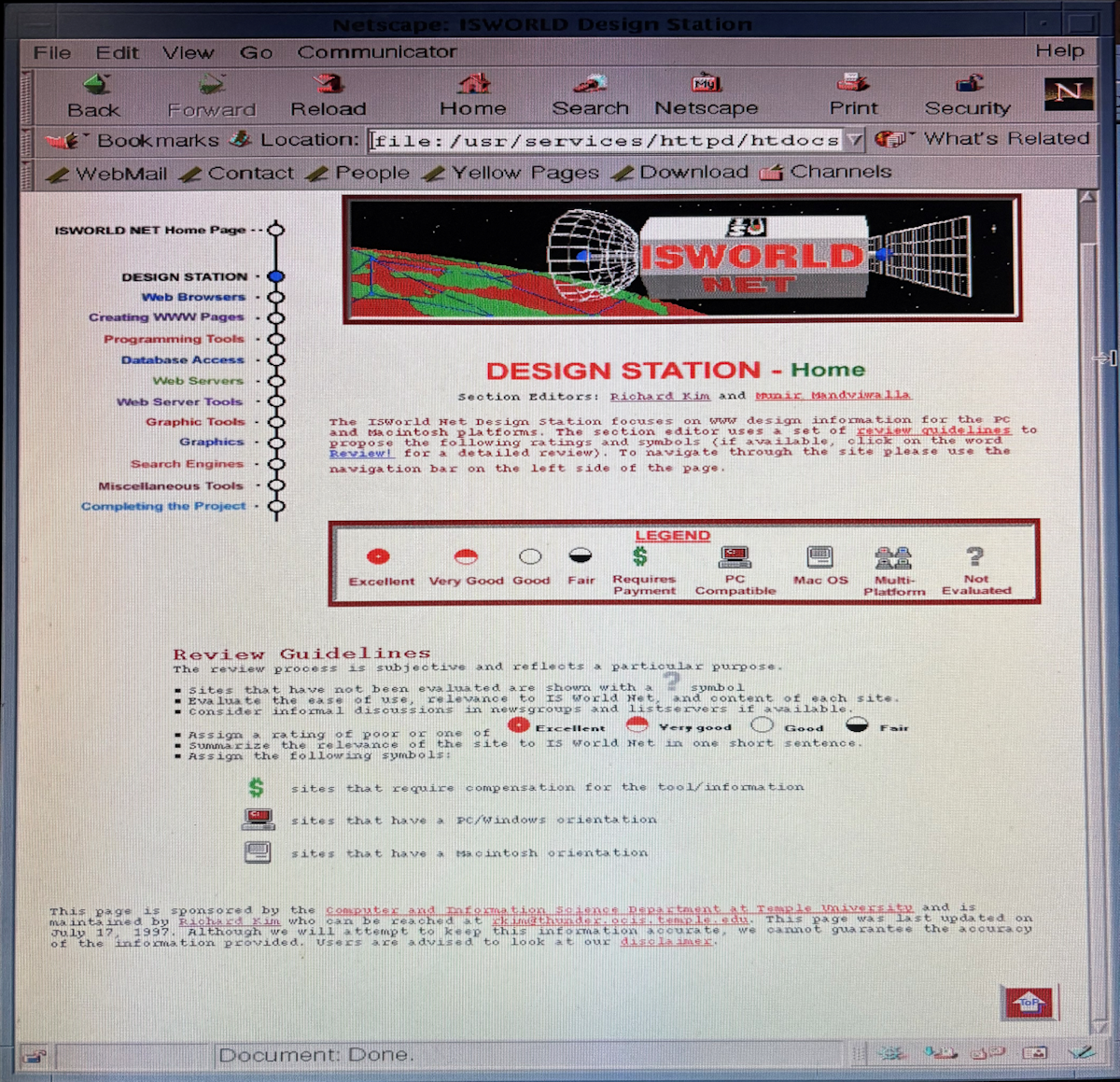 The home page from the July 1997 revision of the ISWorld Design Station web site hosted by Temple Univeristy for use by CIS majors and other web designers.
Lloyd and I recovered this web site off of a large DEC 3000-500 server workstation that used to host email, web sites and other services at Temple University from the mid 90's to early 2000's.
Hi-Res Image
NEXT: retrieve the entire site and publish as a historic archive.">... [ read more ]
|
Electronic Music Is Here (Feb 1963)by billdeg Total messages in this thread: 1 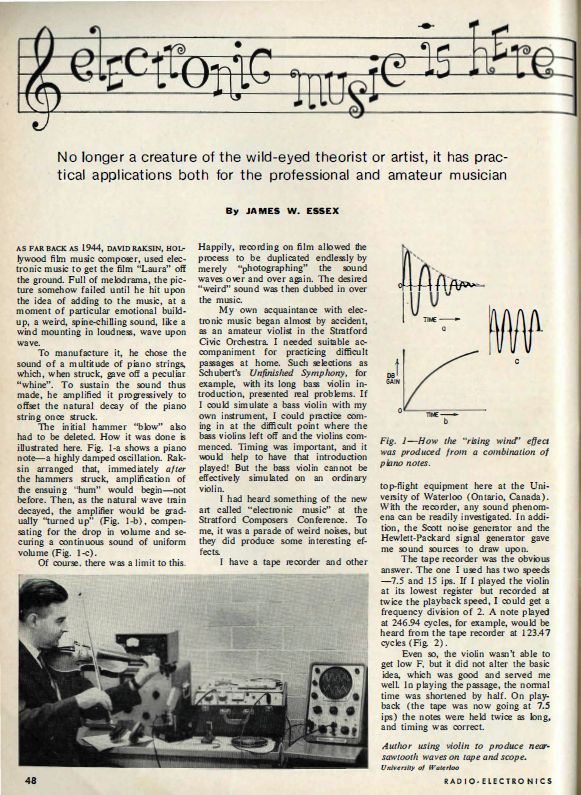 Click imae for larger view.
Electronic Music is Here...."No longer a creature of the wild-eyed theorist or artist, it has practical applications for the professional and amateur musician" - James W. Essex Radio Electronics Magazine, February 1963.
Read entire article">... [ read more ]
|
ePROM 27xx / mcm6876x - ROM Archiveby billdeg Total messages in this thread: 1  Click for larger image.
In 2011 I described a project related to Northstar System Monitor 1.5, and to boot CP/M or anything using a Northstar disk controller.
Click here to read. Use the link below to download the Northstar and other 2708 ROM images
Today I got a new ePROM reader / burner from "kris at mygeekhobby.com", who builds/sells Matt Millan's design.
https://www.mat...-mcm68766-eproms/
In a matter of minutes I was up and going. I started with my unknown 2708s. Until I got this reader I had to fire up my IMSAI 8080 to read the ROMS that way. A newly-constructed Arduino-made-eProm burner is a lu">... [ read more ]
|
IBM 1401 Core Memory Planeby billdeg Total messages in this thread: 1  A single core memory plane from an IBM 1401. Click image for larger view.
This memory plane was on display at the Kennett Classic computer museum but the frame broke in three places. With care, the frame and wires were reassembled as you see here, by using strong clamps and superglue.
From page 9 of the IBM 140 Data Processing System Reference Manual:
"... The IBM 1401 Data Processing System uses maganetic-core storage for storing instructions and data (Figures 10 and 11). All data in core storage is instantly available, and the specical design of the core-storage unit makes each position individually addressable. This means an instructrion can designate the exact storage locations that contain the datta needed">... [ read more ]
|
1979 HAL DS-2000 KSRby billdeg Total messages in this thread: 2 Updated: [ ROM Dump for DS-2000 ] 09/16/2025 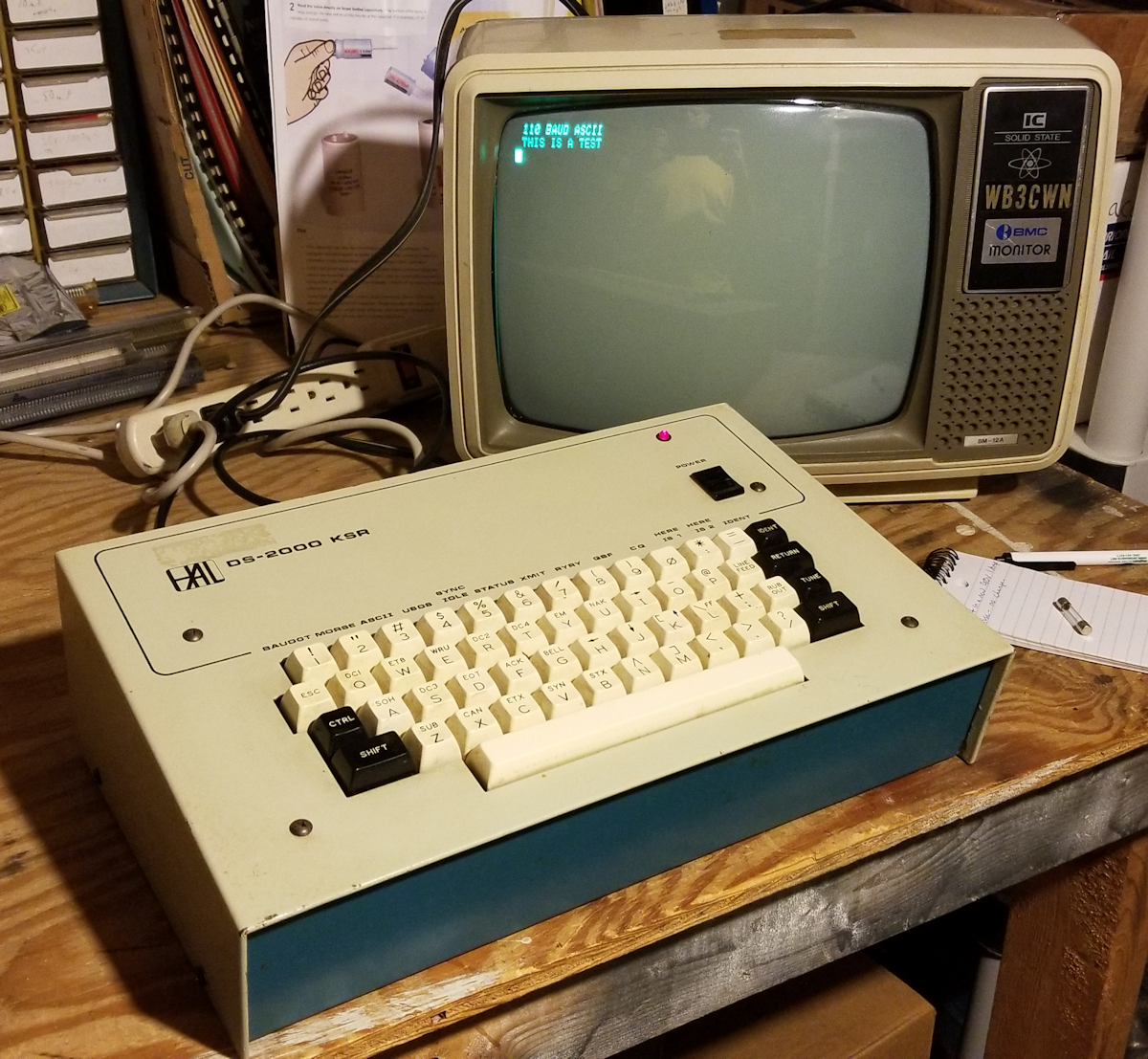 The HAL Communications Corp HAL DS2000 KSR smart terminal. Click on image for larger view.
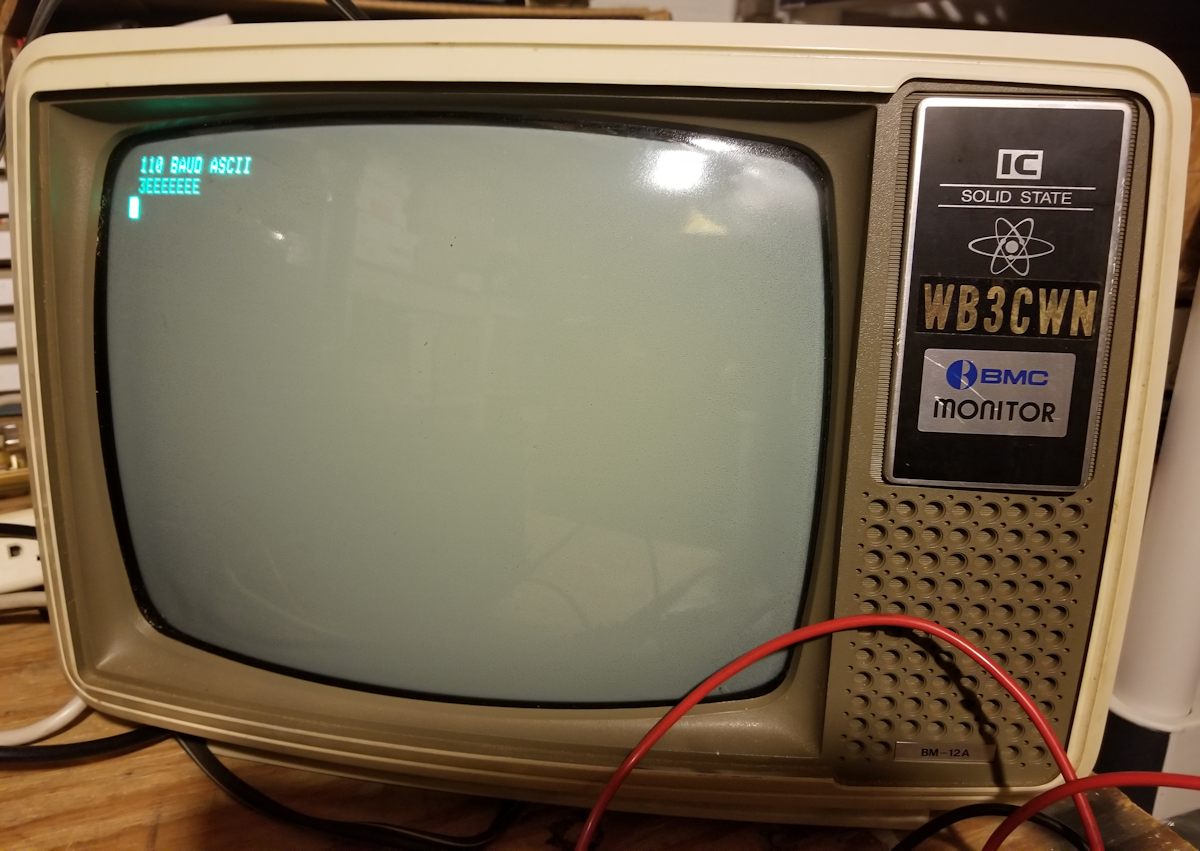 The manual refers to this BMC monitor, so I assume it was purchased along with the KSR unit. Click on image for larger view.
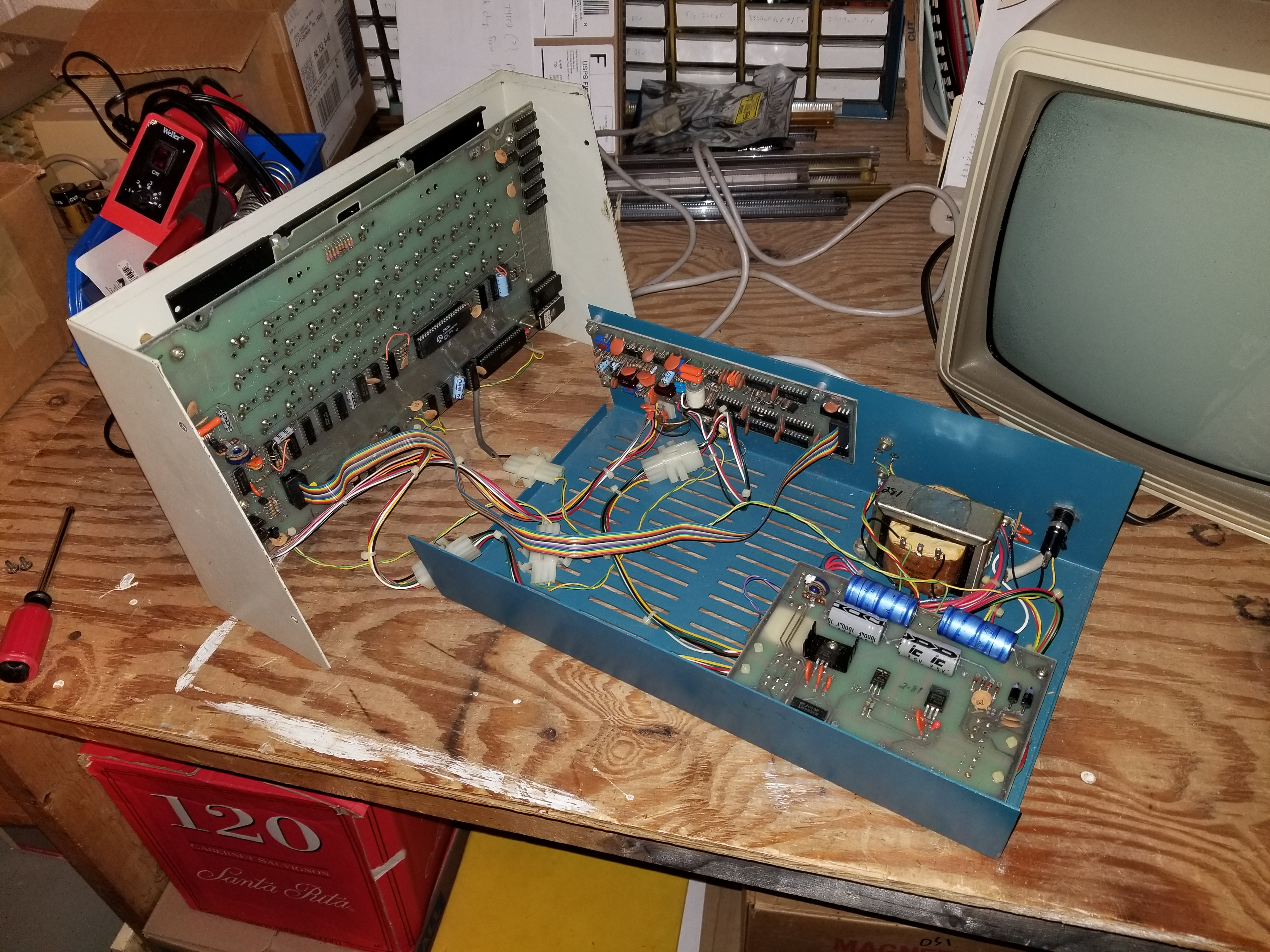 Here is a nice big pic of the boards and wiring view, with the case open. Click on image for larger view.
More pics
What's next? Attach it to a computer expecting a current loop as if the HAL were a Teletype. There is also Morse code and Baudout communications.">... [ read more ]
|
|
OLDER POSTS (15 threads per page):
1 |
2 |
3 |
4 |
5 |
6 |
7 |
8 |
9 |
10 |
11 |
12 |
13 |
14 |
15 |
16 |
17 |
18 |
19 |
20 |
21 |
22 |
23 |
24 |
25 |
26 |
27 |
28 |
29 |
30 |
31 |
32 |
33 |
34 |
35 |
36 |
37 |
38 |
39 |
40 |
41 |
42 |
43 |
44 |
45 |
46 |
47 |
48 |
49 |
50 |
51 |
52 |
53 |
54 |
55 |
56 |
|
Resources:
Popular Topics and FAQs
Past Issues:
Before we switched over to a blog format, past page archives here:
Vintage Computer Festival East 3.0 June 2006
Commodore B Series Prototypes July 2006
VOLSCAN - The first desktop computer with a GUI? Oct 2006
ROBOTS! - Will Robots Take Over? Nov 2006
Magnavox Mystery - a Computer, or? Jan 2007
The 1973 Williams Paddle Ball Arcade Computer Game Feb 2007
The Sperry UNIVAC 1219 Military Computer May 2007
VCF East 2007 - PET 30th Anniversary June/July 2007
The Electronic Brain August 2007
Community Memory and The People's Computer Company October 2007
Charles Babbage's Calculating Machine December 2007
Vintage Computing - A 1983 Perspective February 2008
Laptops and Portables May 2008
From Giant Brains to Hobby Computers - 1957 to 1977 August 2008
Historic Computer Magazines November 2008
World's Smallest Electronic Brain - Simon (1950) December 2008 - Feb 2009
Free Program Listings Spring 2009
Computer Music Summer 2009
Popular Electronics Jan/Feb 1975 - Altair 8800 Fall 2009
Early Microcomputer Mass Storage Summer 2010
6502 homebrew kens number cruncher

This image was selected at random from the archive. Click image for more photos and files from this set.
Total messages in this thread: 2
Updated: [ Reading Tape Images ] 08/19/2026
Here are some tape images Dave Gesswein made with me when I visited his house with some mystery tapes to read, feel free to download and try them out in simH, let me know how it goes tapeImages.zip 162.tu56 is a 12-bit PDP8 tape master.tu56 is an 18-bit pdp-10 tape (or pdp/15) 1973.tu56 is a 16-bit PDP-11 tape, probably Macro-11 stuff If you hex edit the tapes you'll see the columns of 00's to help indicate whether the tape is 12, 16, 18 bit. https://en.wikipedia.org/wiki/DECtape">... [ read more ]